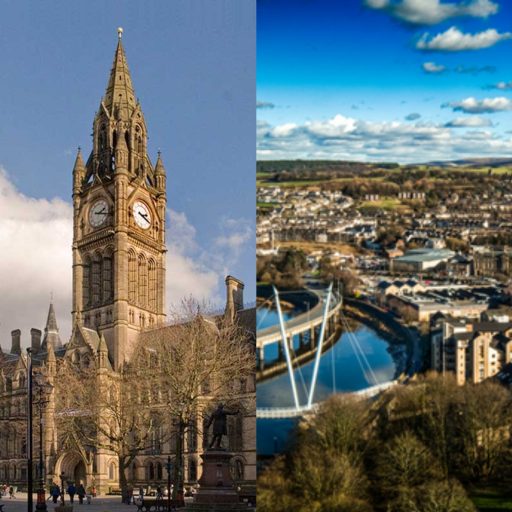

Last week, we had the opportunity to attend the 15th Conference on Teaching and Research in Economic Education (CTREE), where educators from around the world came together to discuss some of the biggest challenges and opportunities facing higher education today.
The conference covered a wide range of topics. However, one theme appeared repeatedly across presentations, workshops and informal conversations: artificial intelligence is changing higher education. Not only is it changing how students complete assessments, but it is also changing how they learn, how lecturers teach, and perhaps even how we think about the value of a university education itself.
These discussions left us reflecting on a much broader question. What is the future of higher education in a world where information is available instantly and increasingly sophisticated AI tools can answer questions, generate essays, write coding and explain complex concepts in seconds?
This is not the first time society has faced technological disruption. Economists often describe history through a series of industrial revolutions. The first mechanised production. The second introduced mass manufacturing. The third brought computers and automation. Many argue that we are now living through a fourth industrial revolution, driven by digital technologies, artificial intelligence and advanced data systems. Although this is exciting, because we are witnessing a major transformation in real time, it is also deeply challenging. At the moment, we do not know the full potential of this technology, nor where its limits may ultimately lie.
There is something that makes AI particularly interesting when compared with many previous technological changes. Historically, technological progress often replaced routine manual tasks while increasing demand for highly skilled workers. Today, AI is beginning to affect many of the jobs traditionally associated with higher levels of education. Professionals across many sectors are already exploring how AI may change the way they work.
Of course, previous industrial revolutions also remind us that technological change does not only destroy jobs. In the medium to long run, it can also create new occupations, new skills and new opportunities in the labour market. However, it is natural that, in the short run, this raises concerns.
If AI can produce reports, summarise research papers, generate computer code and answer exam-style questions, does university education become less valuable?
It is a question that frequently arises in conversations with students, parents and friends. More generally, it forms part of a wider debate about whether attending university is still worth the investment.
From an economic perspective, pursuing a degree involves an opportunity cost. Students typically spend three or more years studying when they could otherwise be earning income through employment. In addition to tuition fees and living expenses, there is the income forgone during those years of study.
Given these costs, it is understandable that prospective students increasingly ask whether university represents a worthwhile investment. The evidence suggests that, on average, graduates continue to enjoy higher lifetime earnings than non-graduates. However, research by Walker and Zhu (2011) shows that returns to higher education vary significantly across subjects, institutions and individual career paths.
Some graduates may initially earn salaries similar to those who entered the workforce directly after school. Yet focusing only on earnings immediately after graduation risks missing the bigger picture. The value of higher education is not only about obtaining a first job. It is also about long-term career prospects, developing knowledge and analytical skills, and building the ability to adapt throughout a career.
These qualities may become even more important as AI becomes more powerful.
If information becomes easier to access, then the value of simply memorising information may decline. However, the ability to confidently evaluate evidence, identify weaknesses in an argument, interpret data, solve unfamiliar problems and communicate effectively remains difficult to automate.
AI can often provide answers. Determining whether those answers are accurate, relevant or appropriate remains fundamentally a human task.
This presents an important challenge for universities. If students can access powerful AI tools both inside and outside the classroom, higher education has to evolve appropriately. Universities will need to rethink how we teach, how we assess learning, and how we help students develop skills that complement rather than compete with AI.
Educators are already debating these issues. Many of them were discussed at the conference. Across institutions, educators are experimenting with new forms of assessment, exploring ways to integrate AI responsibly into learning and teaching (our very own Will presented about how educators can use AI to bring their classes to live), and reconsidering which skills graduates will need in the future labour market.
There is, of course, no simple solution. The technology is evolving rapidly, and no one can confidently predict where AI capabilities will be five or ten years from now. Competition between technology companies continues to accelerate innovation, making it difficult to identify where the limits of these tools may ultimately lie.
Universities have adapted to major social and technological changes throughout history. They survived the printing press, industrialisation, mass education and the rise of the internet. Each transformation forced institutions to evolve. The current challenge may be different in scale, but it is unlikely to be different in principle.
The most interesting questions are therefore not just about technology. They are about people. How do we help students learn effectively? How do we prepare them for an uncertain future? How do we ensure that education continues to create opportunities and improve lives?
These are questions that economists, educators, employers and students will continue debating for years to come. What is certain is that the future of higher education will not be determined by AI alone. It will be shaped by how we choose to respond to it.
References
Walker, I. and Zhu, Y. (2011). “Differences by Degree: Evidence of the Net Financial Returns to Undergraduate Study for England and Wales”. Economics of Education Review, 30(6), 1177–1186


Leave a comment